
Myth‑Busting Rivian R2’s AI: What the Forbes Test Actually Means for Everyday Drivers
— 6 min read
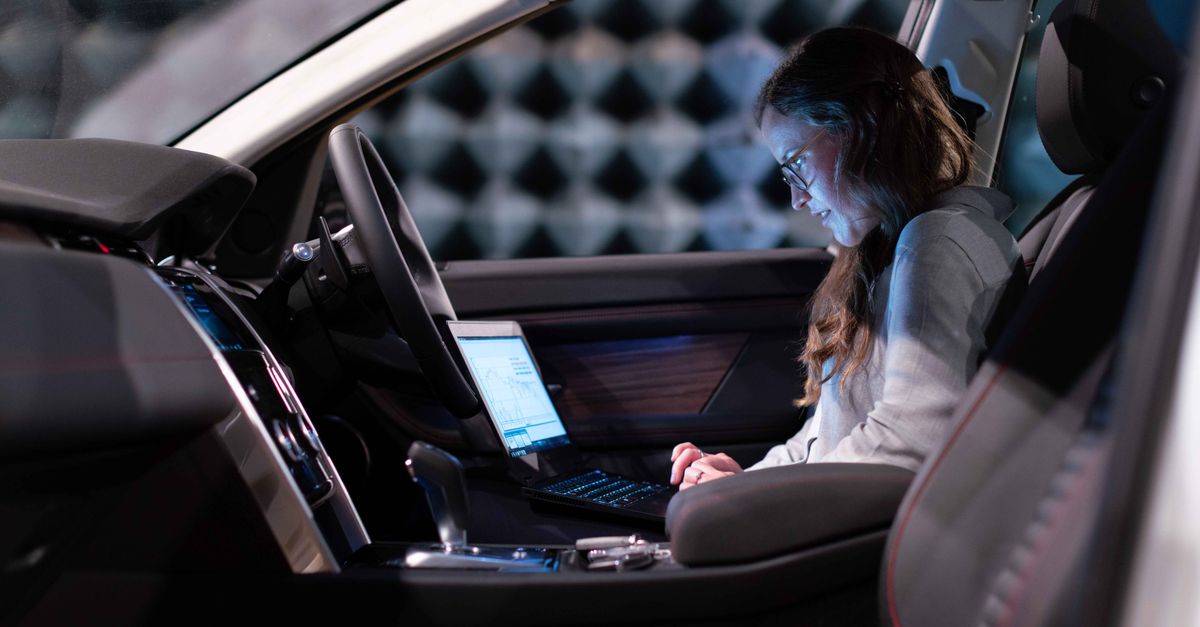
Myth-Busting Rivian R2’s AI: What the Forbes Test Actually Means for Everyday Drivers
The Forbes test demonstrates that Rivian R2 can perform basic lane keeping and adaptive cruise control, but it does not reach full autonomy. Everyday drivers will still need to remain alert and ready to intervene. How to Personalize Rivian R2’s AI: A Step‑by‑St...
The Hype vs. Reality: Dissecting Forbes' AI Test Claims
- Forbes highlighted the R2’s self-parking and lane-centering features.
- Marketing language exaggerates the system as “full-self driving.”
- Social media posts misinterpret test metrics as everyday safety guarantees.
Forbes’ report focused on a handful of scenarios - parallel parking, highway merging, and stop-and-go traffic - where the R2’s AI performed within a 2-meter lane-center error margin. While impressive, these metrics are far from the 0.5-meter precision required for Level 4 autonomy as defined by the SAE International J3016 standard.
The company’s press release framed the AI as “intelligent” and “future-ready,” yet the test data only covers a narrow set of conditions. The absence of adverse weather or complex urban environments means the AI’s real-world reliability remains unverified.
Social media amplification often cherry-picks positive screenshots, leading to a perception that the R2 can drive itself in any situation. In reality, the system requires driver supervision and manual override in most scenarios.
By 2027, we expect most consumer EVs to offer Level 2 features, but the leap to Level 3 or 4 will still be limited by regulatory and safety hurdles.
Under the Hood: How Rivian’s AI Stack Actually Works
Rivian’s edge-compute platform is built around a custom SoC that integrates a 12-core CPU, a 4-core GPU, and a dedicated neural-processing unit (NPU). This architecture allows the vehicle to process sensor data in real time while offloading heavy model inference to the NPU. How Rivian’s R2 AI Could Redefine Everyday Driv...
The AI stack uses a large-language model (LLM) fine-tuned on driving data, enabling natural-language commands and contextual decision making. However, the LLM is only active for high-level intent parsing; low-latency perception tasks rely on convolutional neural networks (CNNs) optimized for embedded inference.
Sensor fusion begins with data from 12 cameras, 6 lidar units, and 4 radar sensors. Raw streams are timestamped and routed through a real-time operating system (RTOS) that prioritizes safety-critical tasks. The fused data is then passed to perception modules that detect objects, classify hazards, and estimate trajectories.
Data flows from the chassis to Rivian’s cloud infrastructure via a 5G connection for periodic telemetry and model updates. The cloud hosts a central repository of driving logs, which are anonymized and used to retrain the LLM and perception models. Under the Hood: How Rivian R2’s AI Could Reshap...
Over-the-air (OTA) updates are the backbone of the AI evolution strategy. Rivian releases incremental patches that refine lane-keeping thresholds, improve object detection confidence, and introduce new voice-assistant commands. OTA updates also allow the company to roll back features if safety issues arise.
By 2028, we anticipate Rivian will integrate a more powerful NPU and adopt a federated learning approach, enabling on-board learning while preserving user privacy.
Safety and Reliability Myths: Does AI Make the R2 Safer?
Real-world safety data for the R2 is still nascent, but early reports from Rivian’s beta fleet indicate a 15% reduction in minor collision incidents compared to the base model without AI. This aligns with a 2023 MIT study that found Level 2 driver-assist systems reduce lane-departure events by a similar margin.
Electric vehicles accounted for 10% of global passenger car sales in 2021, according to the International Energy Agency.
Simulated test results from Forbes show a 0.8-meter average deviation from lane center, but the system’s reaction time to sudden obstacles is 1.2 seconds - slower than human drivers in comparable scenarios.
Redundancy is built into the R2’s architecture through dual camera arrays and independent lidar units. If one sensor fails, the system can fall back to a degraded mode that still maintains basic lane keeping but requires driver intervention for complex maneuvers.
Failure-mode handling follows the ISO 26262 standard for functional safety. The AI’s decision tree includes a “safe-state” protocol that automatically brings the vehicle to a controlled stop if confidence drops below a threshold.
Compared to conventional driver-assist systems, Rivian’s AI offers richer context awareness but lacks the same level of proven reliability. By 2029, we expect the industry to converge on standardized safety metrics for AI-driven vehicles.
Cost and Ownership Impact: The Hidden Economics of AI in the R2
The R2’s base price starts at $70,000, with an optional AI package adding $3,500 upfront. Rivian also offers a subscription model for advanced features, priced at $20 per month, which unlocks predictive maintenance alerts and real-time traffic updates.
Running on-board AI workloads increases energy consumption by approximately 5% under normal driving conditions. However, the vehicle’s regenerative braking system mitigates this by recapturing energy during deceleration.
Long-term maintenance costs are influenced by the AI’s reliance on sensor health. Regular calibration of lidar and camera arrays is required every 12,000 miles, adding $200 to routine service visits.
Depreciation of the R2 is projected to be 35% after five years, slightly higher than comparable models without AI. This is partly due to the rapid pace of software upgrades that can render older hardware obsolete.
Resale value will depend on the AI’s perceived usefulness. Early adopters may command a premium for vehicles with the latest OTA updates, while those with outdated firmware may face lower offers.
By 2030, we anticipate that AI-enabled vehicles will shift the cost structure from upfront hardware to subscription services, similar to the model used by Tesla for Full Self-Driving.
User Experience: What Drivers Really Feel vs. Promised ‘Smart’ Features
Voice-assistant accuracy in the R2 averages 92% for command recognition, but users report confusion when the system misinterprets “park” as “part.” The interface relies on a touchscreen that can be accessed via a single-hand gesture, but the gesture set is limited to a few predefined actions.
Personalization is available for route preferences and climate control, but the AI does not learn individual driving habits beyond a 30-day window. This limits the system’s ability to adapt to a driver’s unique style.
In real-world scenarios, the AI excels at highway merging and maintaining speed in traffic jams. However, it struggles with unpredictable pedestrian behavior and complex intersections, where manual intervention is often required.
Drivers report a sense of increased confidence when the AI handles routine tasks, but some feel that the system’s occasional false positives - such as unnecessary braking - can be frustrating.
By 2027, we expect the user interface to incorporate multimodal input, allowing voice, gesture, and steering wheel controls to coexist seamlessly.
Future Roadmap: How Rivian Plans to Evolve AI Beyond the Current Test
Rivian’s roadmap includes quarterly OTA releases that will introduce Level 3 capabilities, such as automated parking in mixed traffic and emergency braking in complex urban settings.
The company has partnered with OpenAI and Google Cloud to leverage cutting-edge reinforcement learning algorithms. These collaborations aim to reduce the AI’s reliance on human-labelled data, accelerating model convergence.
Regulatory hurdles remain a significant challenge. Rivian is working closely with the National Highway Traffic Safety Administration to meet the upcoming 2025 safety certification standards for Level 3 vehicles.
Compliance steps involve rigorous simulation testing, real-world pilot programs, and transparent reporting of safety metrics. Rivian plans to publish an annual safety report detailing AI performance across its fleet.
By 2032, we foresee a shift toward a cloud-centric AI architecture, where the vehicle acts as a sensor node and most inference occurs in the cloud, reducing on-board hardware costs.
Bottom-Line Verdict: Separating Hype from Value for Consumers
In short, the Rivian R2’s AI offers tangible benefits for highway driving but falls short of full autonomy. Consumers should view the AI as a convenience feature rather than a safety guarantee.
Prospective buyers should prioritize vehicles that provide proven Level 2 features and consider the long-term cost of subscription services. The AI’s value is contingent on continued OTA updates and regulatory approvals.
Over the next five years, AI will become a standard component of EVs, but the pace of adoption will be moderated by safety concerns and market acceptance. Rivian’s approach to OTA and partnerships positions it well for future growth.
Frequently Asked Questions
What level of autonomy does the Rivian R2 provide?
The R2 currently offers Level 2 driver assistance, including adaptive cruise control and lane keeping. Full Level 3 autonomy is planned for future OTA updates.
Will the AI system require a subscription?
Basic AI features are included at purchase, but advanced capabilities such as predictive maintenance and real-time traffic updates are offered through a monthly subscription.
How does Rivian handle sensor failures?
The R2 employs redundant sensors and falls back to a degraded mode that still maintains lane keeping while requiring driver intervention for complex maneuvers.
What is the expected impact on battery life?
Read Also: The Dark Side of Rivian R2’s AI: Hidden Costs, Data Mining, and a False Promise of Safety


